
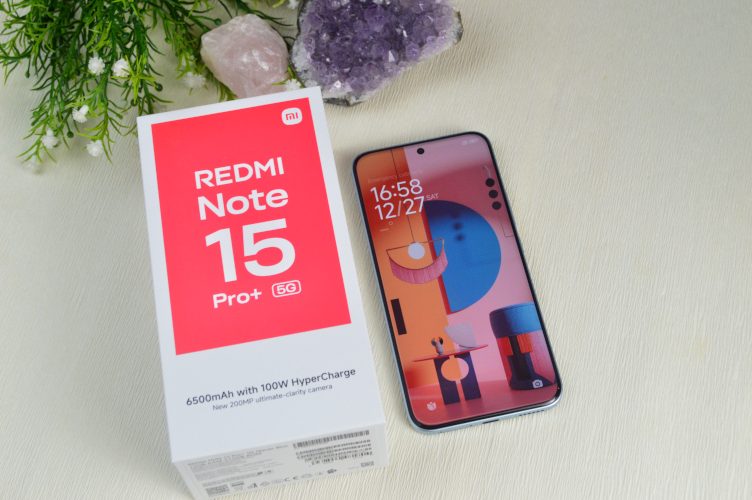
REDMI Note 15 Pro+ said midrange who? Giving Full Flagship Energy Review
March 22, 2026- Performance: Snapdragon 7s Gen 4, 12GB RAM
- Main Display: 6.83-inch CrystalRes
- Weight: 207.1g
- Storage: 512GB
- OS/Software: Android 15, Hyper OS 2.0
- Battery: 6,500 mAh
- Features: 4K, 1080p video recording
- Rear Camera: 200MP Main, 8MP Ultra-wide
- Front Camera: 32 MP Front Camera 1080p Video recording
- Connectivity: Wi-Fi 6E, Bluetooth 5.4, NFC, Dual SIM
- Colour: Glacier Blue
- Rate:4.5/5
- Price: RM1,699
For years, the ‘Note’ series has lived in the shadow of flagships, content with being ‘good enough for the price.’ But with the Redmi Note 15 Pro Plus, Xiaomi has stopped playing nice. With a massive 6,500mAh silicon-carbon battery and a build quality that rivals phones twice its price, the line between ‘mid-range’ and ‘premium’ hasn’t just been blurred—it’s been erased.
The “In-the-Box” Advantage
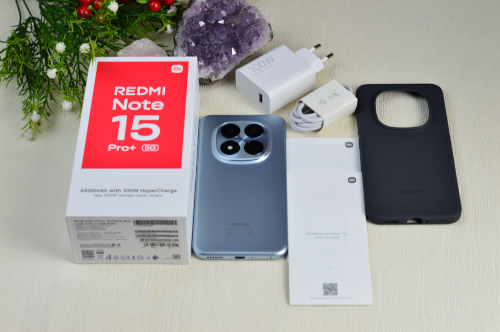
Before diving into the full review, there’s one thing that immediately stands out. In 2026, while most major brands are cutting back on essentials, Xiaomi is doing the opposite.
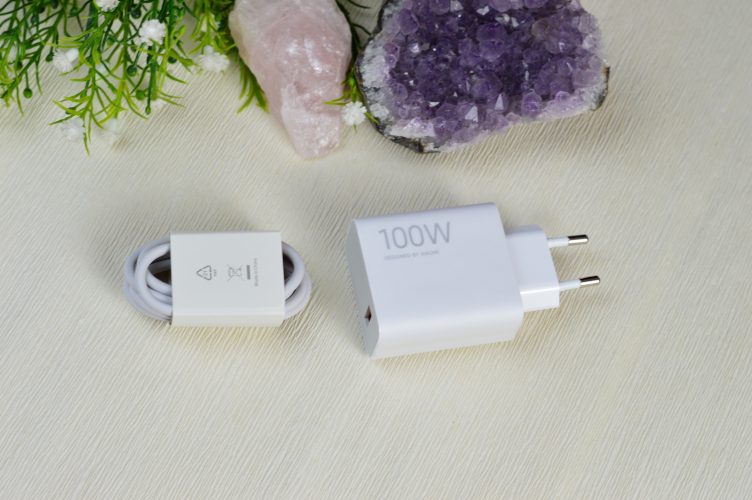
Right out of the box, you’re getting the full experience. That includes a powerful 100W HyperCharge GaN charger, capable of taking the phone to 100% in around 40 minutes — no extra purchases needed.
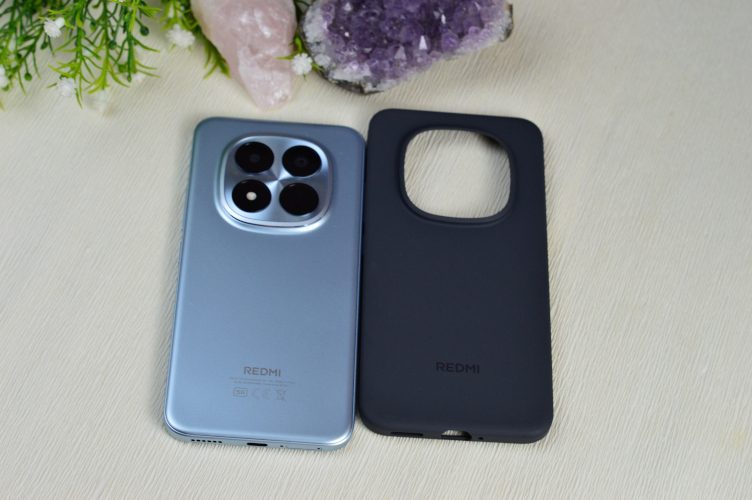
But it doesn’t stop there. Xiaomi still delivers a complete kit, including a 6A fast-charging USB-C cable with its signature orange tip, a matte smoke-grey protective case that fits perfectly around the “Squircle” camera module, and all the essentials like a pre-applied screen protector, SIM ejector tool, and Malaysian warranty card.
It may seem like a small detail, but it makes a real difference from the moment you unbox the device. Everything you need is already there — no compromises, no hidden costs.
The Front: “CrystalRes” Immersion
Power it on, and instantly — the display takes over. Xiaomi has moved beyond the old flat-panel approach, going all-in on a more immersive, edge-to-edge experience that feels bold, modern, and built to impress.
The Screen
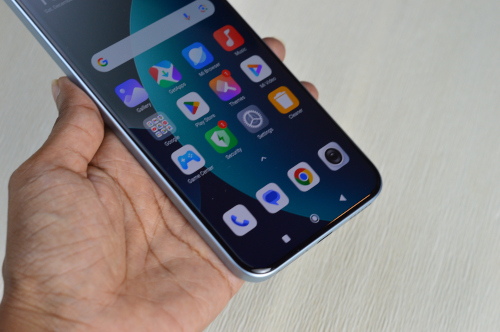
We’re looking at a 6.83-inch CrystalRes AMOLED, and yes, it’s as immersive as it sounds. The real flex? Quad-curved glass.
Not just the sides — it curves slightly at the top and bottom too. Swiping feels insanely smooth, like your fingers are just gliding. It’s subtle, but once you use it, you get it.
The “Punch-Hole”
The front cam cutout — aka the “cat eye” — houses a 32MP sensor. It’s tiny. Smaller than before.
Xiaomi pushed it right up against the top edge, so you get more actual screen and less distraction. Clean. Minimal. Very 2026.
The Protection
And yes, it’s protected by Corning Gorilla Glass Victus 2 — basically the gold standard right now for surviving drops on hard surfaces like concrete.
So it’s not just pretty. It’s built to survive your clumsy moments, too.
The Back: “Subtle Luxury” & The “Squircle”
Flip it over and the vibe changes completely. Xiaomi calls this design language “Subtle Luxury” — and honestly, it fits.
The Camera Design
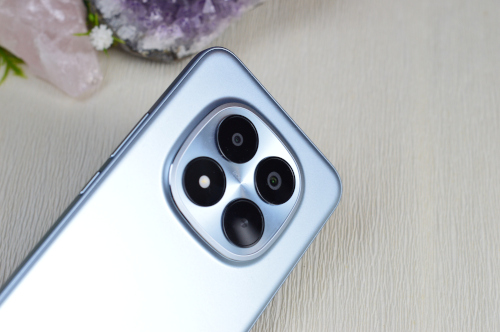
The rear camera module is officially called a Deco Design in a “Squircle” shape — square meets circle.
It’s large, centered, and super symmetrical. Balanced. Clean. Premium energy.
Inside that module, you’ll see four perfectly aligned “eyes”:
The top two are the real heavy hitters — 200MP Main and 8MP Ultra-wide.
The bottom two? Dual-LED Flash and Laser Autofocus sensors — kept circular to maintain that flagship camera aesthetic.
It looks serious. Like it means business.
The Texture
Now this is where it gets interesting — because the feel depends on the color you choose.
Mocha Brown: Comes with Vegan Leather. Soft, grippy, zero fingerprints. It feels expensive the second you hold it.
Glacier Blue & Black: These use Xiaomi’s Ultra-tough Fiberglass. It looks glossy like glass, but it’s lighter and way more impact-resistant. That’s part of what gives the phone its “Titan Durability” status.
So yeah — it’s not just about looks. It’s designed to feel premium and survive real life.
The Camera: MasterPixel Energy
Don’t let the four camera rings on the back fool you—this year Xiaomi is playing a smarter game. Instead of focusing on the number of lenses, the brand is putting its full attention on the power of a single, extremely capable sensor.
The Main Character: 200MP HPE Sensor
At the heart of the setup is the fourth-generation 200MP HPE sensor (1/1.4-inch)—massive for a mid-range phone and clearly carrying the bulk of the camera workload.
Daylight: Unmatched Sharpness

In bright light, this sensor is a beast. Every leaf, brick, and strand of hair is captured with flagship-level clarity. Colors are vibrant and Instagram-ready without ever looking overdone. No lag, no blur, no grain—just point, shoot, and impress.
Night-time: The Reality Check

Low-light is where mid-range limits show. The 200MP sensor struggles to capture enough light, leading to grainy shadows, soft edges, and occasionally blurry faces if the lighting isn’t ideal. The software tries to compensate, sometimes creating an “oil painting” effect that smooths textures too much.
Tips for Better Night Shots:
- Skip 200MP mode – Using full resolution at night will worsen grain and blur.
- Use Night Mode – Takes 1–2 seconds, but AI cleans up grain and brightens scenes effectively.
- Stay steady – Even with OIS, small movements can blur low-light shots.
Stabilised for Real-World Use
The main camera is also equipped with Optical Image Stabilization (OIS). This helps reduce hand shake when shooting photos and videos, ensuring sharper images and smoother footage—especially useful when capturing content on the move.
The Supporting Cast
Alongside the main sensor are two supporting cameras that expand the shooting experience:
8MP Ultra-Wide Camera – With a 120° field of view, it’s ideal for group shots and expansive scenes. It performs best in well-lit environments, although the main sensor still delivers the most impressive results.
32MP Front Camera – Positioned in a punch-hole cutout, the selfie camera delivers crisp self-portraits. It also includes AI Auto-Zoom, which automatically widens the frame when more people enter the shot—making group selfies effortless.
The Day vs. Night Reality (The “8MP + 32MP” Combo)
| Feature | 8MP Ultrawide (Back) | 32MP Selfie (Front) |
| Daytime Vibe | Great. Perfect for 0.5x “squad” shots or landscapes. Colors are punchy and match the main 200MP sensor well. | Elite. Captures every detail of your hair and skin. It’s sharp enough for 4K-style TikToks. |
| Night-time Vibe | The Struggle. This is where you see grain. Since it’s a smaller sensor, it needs a lot of “correct litter” (light) to avoid looking like an oil painting. | AI-Dependent. It uses “AI Portrait Clarity” to brighten your face, but if it’s too dark, you’ll lose that natural texture. |
| The “Secret” | Works best for architecture or travel shots when the sun is out. | Works best for authentic, unfiltered “Gen Z” style selfies. |
The “Correct” Skin Tone: Why Xiaomi Wins

The 32MP front camera is the real hero when it comes to natural skin tones—and that matters for selfies and portraits.
Xiaomi’s Approach: Unlike other brands that rely on heavy beauty filters to bleach or over-smooth skin, the Redmi Note 15 Pro+ uses Texture-Rich Portrait algorithms.
Front Camera Advantage: The 32MP sensor is tuned to capture skin authentically, preserving pores, freckles, and natural undertones. Selfies look real, not artificial.
Back Camera Consistency: Even the 8MP ultra-wide and 200MP main sensors maintain accurate color. Skin tones remain natural under sunlight, without over-saturation or orange tints, reflecting the warmth of Malaysian light perfectly.
The Software: HyperOS 2.0
Powering the device is HyperOS 2.0, Xiaomi’s latest software platform designed to be lighter, faster, and more efficient. It acts as the central brain of the phone, optimising performance while creating a more unified ecosystem across Xiaomi devices.
For the Malaysian market, the phone ships with Android 15 out of the box, backed by a strong software commitment. Xiaomi promises four years of Android OS updates, meaning the device is expected to receive upgrades all the way to Android 19—a reassuring level of long-term support for users who plan to keep their phone for several years.
Memory Management and Virtual RAM
The device comes equipped with 12GB of physical RAM, which is already more than enough for most users. However, HyperOS 2.0 takes things further with Virtual RAM expansion, allowing the system to allocate up to an additional 12GB from internal storage.
This effectively brings the total available memory to 24GB, helping the phone keep multiple apps running in the background without aggressively closing them. Whether you’re switching between editing tools like CapCut, browsing Instagram, or managing multiple tasks at once, the system remains consistently fluid.
User Experience and Performance
In daily use, HyperOS 2.0 feels polished and highly responsive.
One of the key improvements comes from Interruptible Animations. Instead of waiting for animations to finish, users can instantly interact with the interface. If you accidentally open an app, for example, you can immediately swipe it away without delay. This subtle improvement significantly enhances the sense of speed and responsiveness.
The experience is further elevated by the 120Hz CrystalRes display, which makes scrolling through social media feeds, shopping platforms, and websites exceptionally smooth. Navigation across menus and settings feels fluid, with refined motion effects that give the interface a more dynamic and responsive feel.
Another notable feature is Xiaomi’s “Super Island” style notification system, which introduces live notifications at the top of the screen. Timers, music playback, and ride-hailing updates can appear in a small interactive bubble, allowing users to check important information without interrupting what they are currently doing.
The Reality Check: Pre-Installed Apps and Ads
As with many devices in this segment, the phone comes with several preinstalled third-party applications out of the box. Apps such as Booking.com, TikTok, and Agoda may already be present when the device is first set up.
The good news is that most of these applications can be easily uninstalled, allowing users to clean up the system quickly.
Users may also encounter occasional system recommendations within certain Xiaomi apps, such as the File Manager or Security app. Fortunately, this can be significantly reduced with a quick adjustment to the settings.
Tip:
Navigate to Settings > Fingerprints & Security > Authorization & Revocation, then disable MSA. This simple step removes most system recommendations across the interface.
Built-In AI Features
HyperOS 2.0 also introduces a growing suite of AI-powered tools designed to enhance everyday usability.
- Circle to Search – Simply long-press the home bar to instantly search anything visible on the screen through Google.
- AI Wet Touch 2.0 – Intelligent touch recognition keeps the screen responsive even when wet, which is particularly useful in humid or rainy environments.
- AI Writing and Subtitles – Integrated into select apps such as Notes and video playback, these tools assist with summarising content, generating text, and providing real-time translations.
Together, these AI capabilities add practical convenience to the overall experience, showing that Xiaomi is steadily expanding the role of artificial intelligence across its software ecosystem.
Battery: The 6,500mAh Silicon-Carbon Beast
Most mid-range phones in 2026 stick to 5,000mAh, but the Redmi Note 15 Pro+ jumps straight to a massive 6,500mAh Silicon-Carbon (SiC) battery.
Why it matters: SiC technology makes the battery thinner while packing more power. The result? Real-world use—browsing, TikTok, and some gaming—easily lasts two full days. Busy weekends without a charger are no problem.
Battery Longevity: Xiaomi promises the battery will stay above 80% health for 1,600 charge cycles, roughly six years of use. In Malaysia, a 1-year replacement warranty is included if the battery health drops too quickly.
Charging: 100W HyperCharge
While last year’s model had 120W, Xiaomi smartly switched to 100W HyperCharge. It’s slightly slower but better for long-term battery health. Using the included 100W charger, the phone charges from 0% to 100% in around 40 minutes. For maximum speed, enable Boost Mode in the battery settings and keep the screen off.
Heat Management: Thanks to the IceLoop cooling system, the phone stays cool while charging—no overheating worries.
Reverse Charging: Turn Your Phone Into a Power Bank
The phone supports 22.5W wired reverse charging, letting you recharge other devices on the go. Whether it’s a friend’s iPhone or your Redmi Buds, you can plug them in via USB-C and share your battery. With 6,500mAh to spare, you still have plenty of power left for yourself
The Final Verdict: A Machine Built for Work
Look past the cameras—this is a phone designed as a tool, not a toy.
The Machine Specs:
- The Engine: Snapdragon 7s Gen 4 paired with 24GB RAM (including virtual RAM) delivers seamless performance. 4K editing, heavy multitasking, and demanding apps run without a hitch.
- The Tank: The 6,500mAh Silicon-Carbon battery isn’t just large—it’s efficient. Forget power banks; this phone easily lasts two full days.
- The Recovery: 100W HyperCharge brings the battery from 0% to 100% in about 40 minutes.
- The Armor: With IP68/IP69K protection, it withstands rain, splashes, and accidental drops—built to endure real-world use.
Bottom Line:
For anyone seeking a reliable, high-performance workhorse that stays fast, handles everything you throw at it, and keeps going all day, the Redmi Note 15 Pro+ at RM1,699 is an exceptionally smart investment.