Samsung and Industry Partners Share Vision for a Connected Future of Preventive Healthcare
July 28, 2026At Galaxy Unpacked July 2026 in London, Samsung Electronics unveiled its vision for the future of digital healthcare, highlighting how connected technologies, artificial intelligence (AI), and strategic partnerships can help shift healthcare from reactive treatment to preventive, personalised care.
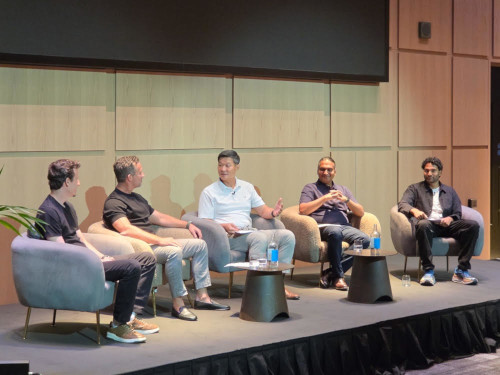
During the event, Samsung hosted a special Health Forum titled “Rewriting the Rules of Preventive Health,” bringing together experts from healthcare, nutrition, fitness, clinical research and AI to discuss how technology can empower people to make healthier decisions every day.
The session was moderated by Dr. Hon Pak, Senior Vice President and Head of the Digital Health Team, Mobile eXperience (MX) Business at Samsung Electronics.
Bridging the Gap Between Health Data and Action
Opening the discussion, Dr. Pak highlighted a growing paradox in modern healthcare. While people today have access to more health data than ever before through wearable devices and smart technologies, chronic diseases continue to rise globally.
According to Dr. Pak, the challenge lies in two critical “missing miles” in healthcare.
The first is continuous monitoring, as many important health indicators occur outside hospitals and clinics. The second is taking action, where individuals must consistently make healthier choices in their daily lives despite busy schedules and changing routines.
Samsung believes its connected ecosystem—including Galaxy smartphones, Galaxy Watches and other connected devices—is uniquely positioned to bridge these gaps by understanding not only biometric data but also the context behind a user’s daily habits.
Rather than simply displaying health statistics, Samsung aims to deliver timely and personalised guidance that helps users make better decisions when they matter most.
AI Supporting Healthier Everyday Choices
Nutrition and physical activity were identified as two of the most influential factors in long-term health.
Kartik Poria, Head of Product at Samsung Food, explained how Samsung Health and Samsung Food are working together to make healthier eating more accessible.
Instead of requiring users to manually manage every aspect of their diet, Samsung’s AI-powered platform learns individual eating habits and recommends meal options that better fit users’ lifestyles.
The goal is to make healthy eating the easier choice, whether someone has time to prepare a meal or needs a quick dinner solution after a long day.
Fitness That Adapts to Every User
Exercise also plays an essential role in preventive healthcare.
Kevin Duffy, CEO of iFIT, discussed how Samsung Health integrates with iFIT’s expert-led fitness programmes to create more personalised workout experiences.
Using Galaxy Watch data, users can monitor key fitness metrics during workouts while receiving personalised recommendations based on Samsung’s Fitness Index.
Looking ahead, Samsung’s Health Assistant is expected to combine a user’s fitness level, health goals and activity history to recommend workouts tailored to their current condition rather than following a one-size-fits-all programme.
Building Trust Through Clinical Research
The discussion also focused on the importance of clinical validation and consumer trust.
Rohit Ail, Head of the Technology Incubation Lab at Samsung R&D Institute UK (SRUK), highlighted Samsung’s ongoing collaborations with healthcare organisations and research institutions across Europe.
These partnerships include projects with the UK’s National Health Service (NHS) as well as hospitals in Spain and Italy to study cardiovascular disease, AI-assisted healthcare and long-term monitoring of cancer survivors using wearable technologies.
Samsung emphasised that scientific evidence, clinical validation and privacy remain fundamental to expanding digital healthcare.
Privacy Remains a Core Priority
As health technologies become increasingly connected, Samsung reaffirmed its commitment to protecting user data.
The company explained that personal health information remains under the user’s control through multiple layers of protection, including Samsung Knox security, GDPR-compliant infrastructure and privacy frameworks designed for healthcare applications.
Samsung is also developing decentralised clinical trial systems that allow medical research while keeping participant identities protected.
AI That Understands the Human Body
The forum also explored the future role of AI in healthcare.
Otávio Penatti, Head of the Health AI R&D Team at Samsung R&D Institute Brazil, introduced Samsung’s work on health foundation models capable of interpreting complex biological signals collected from wearable devices.
Rather than analysing individual health readings separately, these AI models learn from multiple biosignals such as ECG, heart rate and movement patterns to better understand a person’s overall health.
Samsung believes this technology could eventually provide earlier predictions of potential health issues while delivering more personalised wellness insights.
A Shared Vision for Connected Healthcare
The forum concluded with each speaker sharing their vision for the future of connected healthcare.
Their common goal centred on creating a healthcare ecosystem where AI works quietly in the background to support healthier lifestyles, trusted clinical care and personalised guidance.
Samsung says the future of healthcare will not simply be about collecting more health data, but about transforming that information into meaningful actions that help people live healthier, more active lives.
By combining AI, connected devices and collaborations with healthcare partners, Samsung aims to build a future where preventive healthcare becomes more intelligent, accessible and personalised for everyone.