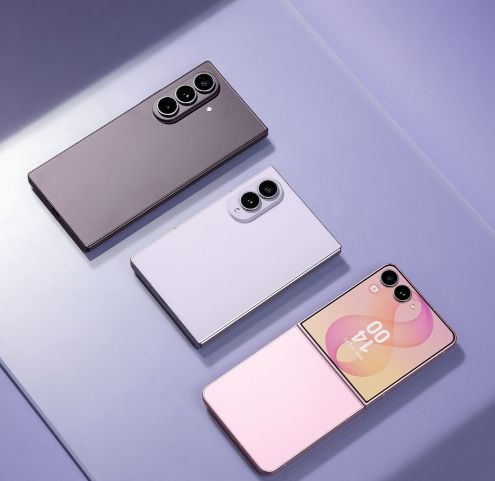
From First Fold to Galaxy Z Fold8: How Samsung Is Rethinking the Foldable Phone
September 11, 2026Foldable smartphones are no longer just a futuristic concept. What started as a niche experiment has gradually become a more established category, with manufacturers looking beyond simply making a screen that bends.
For Samsung, the journey began with the first Galaxy Fold in 2019. Since then, the Galaxy Z family has gone through several generations of refinement, with each generation bringing lessons about durability, design, software, artificial intelligence and, perhaps most importantly, how people actually use a phone that can change its shape.
The latest eighth-generation Galaxy Z series reflects years of that development. But what does it really take to make a foldable phone work?
Here are eight areas where Samsung has continued pushing the technology forward.
1. Making a Foldable More Durable
The most obvious difference between a foldable and a conventional smartphone is the display. But behind that folding screen is a much bigger engineering challenge.
Samsung has had to continuously work on materials, display support, durability and hinge construction to make a device that can withstand everyday opening and closing.
The latest Galaxy Z series introduces Flex Titanium technology, using a titanium-based display structure designed to strengthen display support, improve durability and reduce the visibility of the crease while also helping Samsung develop thinner devices.
For users, this matters because a foldable needs to feel like a smartphone you can actually live with — not something that needs to be handled like a fragile piece of technology.
2. Making the Fold Feel More Natural
A foldable is only as good as the experience of opening and closing it.
Samsung’s development has shown that the hinge is more than just a mechanical component. Its design affects how naturally the phone opens, how thin the device can become and how comfortable it feels in everyday use.
The latest Galaxy Z generation combines refinements to the hinge mechanism, display tension and folding magnets to make the opening experience smoother.
On the Galaxy Z Fold8 Ultra, this contributes to a device measuring just 4.1mm when unfolded, showing how much the form factor has evolved from the earlier generations of foldables.
3. Making the Bigger Screen Actually Useful
One of the biggest reasons to buy a foldable is the additional screen space. But simply giving users a larger display isn’t enough.
Samsung has increasingly focused on making that extra space useful for activities that benefit from a larger canvas.
The Galaxy Z Fold8 introduces a 4:3 main display, designed for immersive viewing and gaming. Rotate the device and the 3:4 ratio becomes better suited to reading and browsing.
That larger canvas can also be useful for people creating and editing content, including experiences such as My FanCam.
This is where foldables start to feel different from traditional smartphones. Instead of simply giving you a bigger phone, the idea is to give you more ways to interact with the same device.
4. There Isn’t Just One Type of Foldable User
Samsung’s years of consumer feedback have also highlighted something important: not everyone wants the same type of foldable.
Some users want a large workspace for productivity. Others want a compact phone that can quickly access information, while some see the foldable design as a way to express their personality.
Samsung’s current Galaxy Z range reflects these different needs.
The Galaxy Z Fold8 Ultra is positioned around productivity and a more premium foldable experience, while the Galaxy Z Fold8 focuses on immersive discovery and multitasking. The Galaxy Z Flip8, meanwhile, takes a more compact approach, focusing on expression, quick interactions and life on the go.
Rather than treating the foldable as one fixed category, Samsung is effectively creating different interpretations of what a foldable smartphone can be.
5. Hardware and Software Have to Work Together
A phone that physically changes shape also needs software that understands what is happening.
Apps, windows, information and controls need to move naturally between displays and orientations. Otherwise, the impressive hardware can quickly become frustrating to use.
Samsung has increasingly built its software experience around the flexibility of its foldables.
On the Galaxy Z Fold8 Ultra, features such as Multi Window, AI-powered multitasking with Now Nudge and Gemini Notebook make greater use of the larger display.
On the Galaxy Z Flip8, the more capable FlexWindow allows users to access apps, information and actions without necessarily having to unfold the phone.
The goal is to make the changing physical form of the device feel natural rather than forcing users to constantly think about which mode they are using.
6. Bringing AI Into the Foldable Experience
AI is becoming another important part of the smartphone experience, but Samsung’s approach is moving beyond simply asking an AI assistant a question.
The latest Galaxy Z generation brings agentic AI into the experience, designed to help users move between information, apps and actions more naturally.
The larger displays also provide more space for AI-powered productivity tools. Gemini Notebook, for example, can bring together information from different sources and help users organise their thoughts and content in one place.
This is where Samsung sees the combination of foldable hardware and AI becoming more interesting. The screen provides the space, while AI helps users make better use of it.
7. Making the Switch to a Foldable Easier
Adapting to a new smartphone isn’t just about learning new features. There is also the question of moving everything from your old phone to the new one.
Samsung’s latest Galaxy Z generation aims to reduce that friction through Smart Switch, allowing users to wirelessly transfer important information such as contacts, photos, messages, apps and settings.
The system also supports transfers from iOS devices.
With One UI 9, iPhone users can initiate the transfer process by scanning a QR code, making the move into the Galaxy ecosystem more straightforward.
It may not be the most exciting feature on a spec sheet, but removing these small barriers can make a big difference when someone is considering switching devices.
8. Building More Than Just a Foldable Phone
Perhaps the biggest lesson from Samsung’s foldable journey is that the technology cannot depend on one innovation.
Every generation brings new questions. How durable should the display be? How thin can the phone become? How should the software respond when the device changes shape? What do people actually want to do with a larger screen?
Samsung’s answer has evolved generation by generation.
The latest Galaxy Z Series brings together developments such as the Flex Titanium display structure, thinner designs, redesigned display ratios, more capable FlexWindow experiences and deeper AI integration.
Put together, these aren’t simply individual upgrades. They represent years of engineering, experimentation and feedback from people using foldables in the real world.
The Foldable Future Is Becoming More Practical
The biggest change in foldables may not be the fact that the screen can fold anymore. It is how much more naturally the entire experience is starting to fit into everyday life.
For users who need a larger workspace, the Galaxy Z Fold8 offers a more flexible way to multitask, view content and create on the go. Those looking for Samsung’s most premium foldable experience can turn to the Galaxy Z Fold8 Ultra, while the Galaxy Z Flip8 offers a more compact approach for creators, selfies and quick everyday interactions.
In Malaysia, consumers can purchase the new Galaxy Z Series during the current promotional period from 14 August to 4 October 2026, with savings of up to RM1,909.90 across the Galaxy Z Fold8 Ultra, Galaxy Z Fold8 and Galaxy Z Flip8.
After several generations of experimentation, Samsung’s foldable story is no longer simply about proving that a smartphone can fold. It is about figuring out what a phone can become once it does.