
Suunto Run 2 Arrives in Malaysia with 2,000-Nit AMOLED Display, Dual-Band GNSS and Free Offline Maps
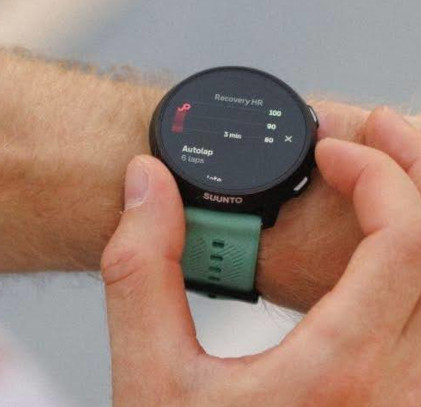
September 30, 2026For runners who take their training seriously but do not want a bulky watch weighing them down, Suunto Run 2 has arrived in Malaysia with a lightweight 35g design and a set of features built around everyday running, structured training and marathon preparation.
Suunto’s latest running watch combines a 2,000-nit AMOLED display, around 10 days of battery life, new-generation dual-band GNSS, a redesigned 12-channel wrist heart rate sensor and free worldwide offline maps.
Alongside the Run 2, Suunto is also introducing the Suunto Smart Heart Rate Belt 2, designed for runners and endurance athletes who want more detailed heart rate and training data.
A Lightweight Watch Designed to Stay on Your Wrist
At just 35g for the watch body and measuring 11.7mm thick, the Run 2 is designed to be worn throughout the day rather than only when it is time to run.
That means runners can keep the same watch on during work, training, sleep and recovery, allowing data from different parts of the day to come together in one picture.
The watch features a 1.32-inch AMOLED display capable of reaching more than 2,000 nits, making it three times brighter than the previous Suunto Run.
For runners, this matters when checking pace, distance or heart rate under direct sunlight. The large and clear numbers are designed to be read quickly without having to stop or interrupt the rhythm of a run.
The watch also comes with a stainless steel bezel, Gorilla Glass and 5 ATM water resistance, giving it the durability needed for changing weather and long training sessions.
Up to 10 Days of Battery Life
Battery life is another area where Suunto has made an upgrade.
The Run 2 has 29% more battery capacity than the previous Suunto Run, offering around 10 days of everyday use with training, while dual-band GNSS can provide up to 24 hours of battery life.
That gives runners enough endurance to get through a full training week without constantly reaching for the charger.
As always, actual battery life will vary depending on settings, usage and operating conditions.
More Confidence in Every Kilometer
For runners who train according to heart rate, the Run 2 introduces a redesigned 12-channel wrist heart rate sensor positioned behind 2.5D curved sensor glass.
The sensor is designed to provide more accurate heart rate information across different types of sessions, from easy recovery runs and steady training to high-intensity intervals and race-day efforts.
For those who want even more detailed heart rate data, the Run 2 can also be paired with the new Suunto Smart Heart Rate Belt 2.
Suunto Smart Heart Rate Belt 2
The Smart Heart Rate Belt 2 is aimed at endurance athletes who want accurate exercise heart rate and high-resolution beat-to-beat R-R interval data.
Unlike relying solely on a wrist sensor, a chest belt can be particularly useful during activities where wrist contact becomes less consistent, including running, cycling, triathlon and winter or mountain sports.
The belt uses ECG-based detection to identify QRS-complex artefacts in heart rate and R-R interval measurements, while its updated construction is designed to reduce electrical interference.
It also uses a soft strap with a silicone grip to help keep the belt securely in place during longer workouts.
Battery life is rated at approximately 460 hours, reducing the need for frequent charging.
When paired with a compatible Suunto watch, its six-axis IMU can also provide running-form measurements including:
- Cadence
- Ground contact time
- Vertical oscillation
- Flight time
- GCT/FT ratio
- Left/right ground-contact balance
The belt can store up to 20 hours of rolling workout data, allowing compatible Suunto watches to retrieve the information by timestamp if there is a temporary signal interruption.
It can also connect to up to three devices simultaneously, allowing the same live heart rate data to be sent to a watch, bike computer and smartphone.
ZoneSense Looks Beyond Fixed Heart Rate Zones
One of the more interesting training features is Suunto ZoneSense, which uses heart rate variability to provide a more personalised view of exercise intensity.
Traditional heart rate zones provide a general guide, but how hard the body is actually working can change depending on fatigue, recovery and conditions on the day.
ZoneSense looks at the body’s response during the session to indicate whether a runner is working aerobically, moving into anaerobic intensity or approaching maximum effort.
This can give dedicated runners another way to understand whether they are pushing too hard, staying within the intended training intensity or have more capacity available.
ZoneSense requires a compatible Suunto watch.
Dual-Band GNSS for More Accurate Route Tracking
The Run 2 also upgrades its positioning capabilities with new-generation dual-band GNSS.
It tracks L1 and L5 signals across GPS, GLONASS, Galileo, BeiDou and QZSS, helping keep location, distance and pace closer to the actual route.
For city runners, marathoners and anyone training on routes where GPS accuracy matters, this means the watch can provide more useful information about where you are, how far you have gone and the pace you are maintaining.
Real-Time Information While You Are Still Running
The Run 2 also introduces features designed to help runners make decisions during a workout rather than only analysing the session afterwards.
EnergySense shows current effort against remaining capacity, helping runners understand how much they are spending and what may still be available.
Meanwhile, Live Finish Prediction uses current pace to estimate where that pace could take the runner in terms of finishing time.
These tools can be particularly useful during longer runs, where a runner may need to decide whether to maintain the current pace, ease off or push harder.
From Your First Marathon to a Personal Best
Suunto is also positioning Run 2 as a watch that can support an entire training block.
With Training Plan, runners can set a goal such as completing a marathon in under four hours, with the plan translating that target into different sessions including easy runs, intervals and long runs.
Training Zone brings together training load, HRV, sleep and recovery information, giving runners a broader picture of how their body is responding throughout a training block.
There are also dedicated running modes for everyday training, speed sessions and racing.
When race day arrives, Marathon Mode adds tools including Ghost Runner and other race-focused features designed to help runners keep track of their target from the starting line to the finish.
Offline Maps Without Taking Out Your Phone
Another useful addition is free worldwide offline maps.
Maps can be downloaded directly to the watch and accessed from the wrist without requiring an active phone connection.
That could come in handy when running in an unfamiliar city, exploring a new route or heading somewhere where connectivity is limited.
Instead of constantly checking a smartphone for directions, runners can keep the route and surrounding streets available directly on the watch.
And for those who prefer running without a phone, music can also be stored on the Run 2 and played through wireless headphones.
A Running Watch That Goes Beyond the Run
The Suunto Run 2 is clearly built around runners, but its appeal is in how much of the training journey it brings together.
From daily runs and interval training to recovery, sleep, marathon preparation, route navigation and race-day pacing, the watch is designed to keep the information runners need close at hand.
The lightweight 35g body also means it is designed to remain on the wrist throughout the day, rather than becoming another piece of equipment that needs to be put on and taken off depending on the activity.
With the addition of the Smart Heart Rate Belt 2, runners who want deeper performance data can also take their training analysis further.
For anyone building towards a first marathon or chasing a new personal best, Suunto Run 2 brings together the tools needed to track the kilometres, understand the effort and stay focused on the next goal.