How Samsung Is Tackling Sleep Apnea to Energize Your Days
March 22, 2026Millions of people worldwide suffer from Sleep Apnea, yet many remain unaware of it. This serious condition causes breathing to pause during sleep, disrupting oxygen supply, lowering sleep quality, and potentially leading to health complications such as hypertension and stroke.
Despite these risks, sleep apnea often goes undiagnosed, as traditional detection typically requires time-consuming and costly in-lab sleep studies.
To mark World Sleep Day 2026, a global study of Samsung Health users is shedding new light on how widespread the condition is and how significantly it impacts sleep. In line with this year’s theme, “Sleep Well, Live Better,” Samsung is turning invisible warning signs into actionable insights through its Galaxy Watch series, helping users take control of their sleep health.
How Sleep Apnea Disrupts Your Sleep
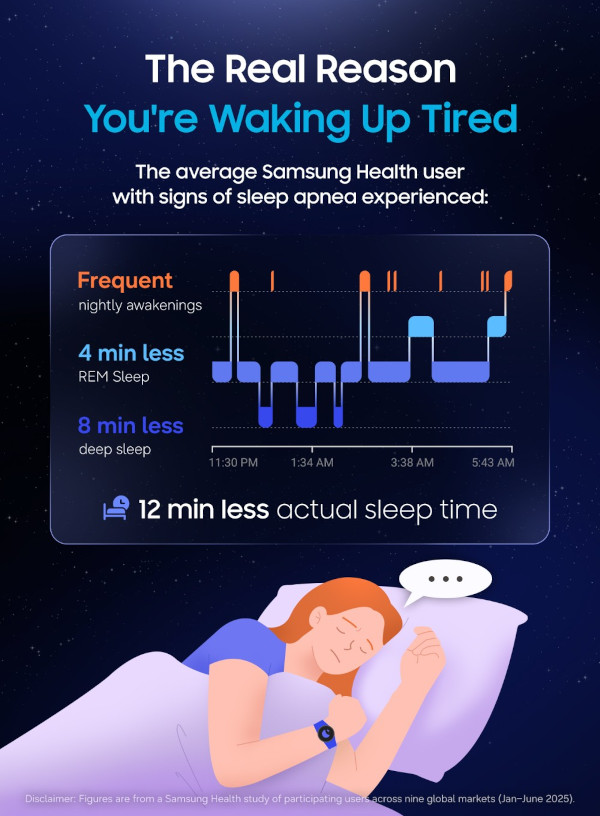
The study found that nearly a quarter of participants are at risk of sleep apnea.
According to behavioral sleep scientist Dr. Vanessa Hill, repeated breathing interruptions fragment sleep cycles and prevent the brain from staying in essential stages like REM and deep sleep — both crucial for mental and physical recovery.
These disruptions can lead to several key issues:
- Reduced REM Sleep
Users with moderate to severe signs of sleep apnea experienced less REM sleep — the stage responsible for processing emotions, consolidating memories, and supporting learning. A lack of REM sleep can result in mood instability and reduced cognitive performance. - Less Deep Sleep
Sleep apnea also reduces deep sleep, the phase where the body repairs muscles, releases growth hormones, and strengthens the immune system. Without it, users may feel physically exhausted and recover more slowly. - Frequent Night Awakenings
Those at risk tend to wake up more often and stay awake longer during the night, disrupting the sleep cycle and preventing restorative rest. - Shorter Sleep Duration
On average, affected individuals get less total sleep. While the difference may seem small, the fragmented nature of sleep significantly impacts overall quality.
“Even a small loss in sleep duration is compounded by a larger loss in sleep quality,” said Dr. Hill. “This can be the difference between simply being in bed and getting truly restorative rest.”
How Galaxy Watch Helps Detect Sleep Apnea
For years, detecting sleep apnea has been challenging due to the need for clinical sleep studies. Now, Samsung is making early detection more accessible through its Galaxy Watch.
- How It Works
Users simply track their sleep for more than four hours across two nights within a ten-day period using a compatible Galaxy Watch. The feature is available via the Samsung Health Monitor app. - The Technology
Using the BioActive Sensor, the watch tracks blood oxygen levels to identify potential breathing interruptions. It then estimates the Apnea-Hypopnea Index (AHI), a key indicator of sleep apnea severity. - From Awareness to Action
Early detection allows users to seek professional medical advice sooner. Beyond detection, the Galaxy Watch also offers tools like Sleep Coaching and Bedtime Guidance to help users build better sleep habits.
Dr. Hill noted that wearable technology plays a crucial role in lowering barriers to diagnosis, allowing users to gather meaningful data from the comfort of their own homes.
Take Control of Your Sleep
A good night’s sleep is the foundation of better health and daily performance. Through its connected ecosystem, Samsung provides end-to-end support — from detecting potential sleep issues to guiding users toward better habits and professional care.
By making sleep health more accessible and actionable, Samsung is helping users move closer to a healthier, more energised life.