
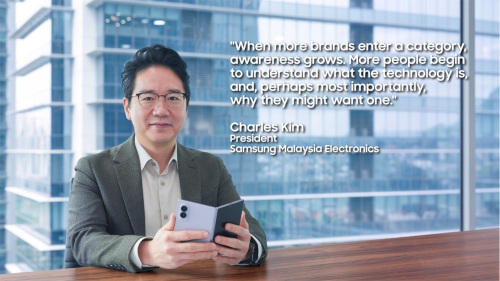
Samsung: Foldable Phones Are No Longer Just a Novelty as Competition Fuels Growth
October 20, 2026As more technology brands enter the foldable smartphone market, Samsung believes the industry is moving beyond proving that a phone can fold to showing consumers how the technology can improve their everyday lives.
Foldable smartphones were once seen as a niche category, appealing mainly to technology enthusiasts curious about what a folding screen could do. Today, that perception is beginning to change as more major technology brands enter the market and consumers become increasingly familiar with what foldable devices can do.
For Samsung, which introduced its first Galaxy Fold in 2019, growing competition is a sign that the concept is becoming more relevant to the wider mobile industry. Rather than viewing new entrants with apprehension, the company sees an opportunity to expand awareness, encourage innovation and help more consumers understand why they might want a foldable smartphone.
The question is no longer simply whether a phone can fold. It is about understanding what a foldable device can offer and whether its design makes sense for how people work, communicate, create, and enjoy entertainment.
From “Does a Phone Fold?” to “Why Do I Need a Foldable?”
The next chapter of foldable smartphones will depend on how well manufacturers demonstrate their practical value in everyday life.
For some consumers, a larger display, such as the 4:3 screen highlighted in Samsung’s Galaxy Z Fold8 proposition, offers a more immersive space for watching videos, reading and gaming, while retaining the convenience of a device that folds into a more compact form.
Others may prioritise productivity and multitasking, using a device such as the Galaxy Z Fold8 Ultra as an all-in-one tool for work and content creation. Meanwhile, a compact flip phone such as the Galaxy Z Flip8 may appeal to consumers who value portability, convenience and self-expression.
Foldables can also offer new ways to create content and interact with a smartphone, depending on the device’s design and software features.
These different approaches show why there is no single definition of what a foldable smartphone should be. Instead, manufacturers are developing devices around different user needs, allowing consumers to decide which design fits their lifestyle.
The category is gradually moving from something people stop to look at out of curiosity to something they may seriously consider when choosing their next smartphone.
Why Malaysia Is an Interesting Market for Foldables
Malaysia presents an interesting opportunity for the foldable smartphone market, given how deeply mobile technology is integrated into everyday life.
According to the national information and communications technology data cited by Samsung, mobile phone usage among individuals reached 99.6% in 2025, while internet usage reached 98.3%.
With mobile devices already playing a central role in communication, work, entertainment and daily activities, the opportunity lies in determining whether a different smartphone form factor can improve how people use their devices.
Samsung also cited its 2024 post-launch consumer research across Southeast Asia and Oceania, which included 300 Malaysian respondents. The research found strong purchase interest in the Galaxy Z series among younger consumers, particularly Millennials and Gen Z, with foldables associated with productivity, creativity and photography.
While these findings reflect the respondents surveyed rather than the entire Malaysian market, they offer an indication of how younger consumers may be considering foldable devices beyond their novelty.
For users who regularly multitask, edit content on the go, read on their phones or enjoy a larger display without carrying a separate tablet, a foldable could offer practical advantages. The challenge for manufacturers is to show how those benefits translate into real-world use.
Competition Pushes Foldable Technology Further
Developing a foldable smartphone is a complex engineering challenge. Making a screen fold is only the starting point. Manufacturers must also address durability, hinge design, weight, display quality, software optimisation and how the changing form factor can improve the overall user experience.
At the same time, foldable devices must continue to deliver the features consumers expect from any smartphone, including reliable battery life and capable cameras.
Samsung points to the progress made across its Galaxy Z series as an example of how the category has evolved. The company’s first Galaxy Fold weighed 276g, while the Galaxy Z Fold8 is listed at 201g, making it Samsung’s lightest Fold model to date.
The latest generation also introduces changes to its form factor, display, hinge and internal architecture. Alongside the Galaxy Z Fold8 and Fold8 Ultra, the Galaxy Z Flip8 serves consumers with a different set of priorities, from immersive viewing and productivity to compactness and personal expression.
This progress reflects years of development and feedback about what consumers want from foldable devices, as well as what still needs improvement.
Competition can accelerate that process. As more brands introduce their own designs and approaches, the industry has greater incentive to improve hardware, refine software experiences and explore new ways for foldable displays to be used.
For consumers, this could eventually mean more choices across different designs, price points and use cases.
Consumers Will Decide What Comes Next
Ultimately, the future of foldable smartphones will be determined by consumers rather than manufacturers alone.
Potential buyers will want answers to practical questions: Is a foldable useful for work? Does it fit into a daily routine? Is it durable enough for long-term use? Does the larger display make a meaningful difference? And are its advantages worth the price compared with a conventional smartphone?
These questions will shape how quickly foldables move into the mainstream.
Samsung has reported encouraging early demand for its latest Galaxy Z8 generation across Southeast Asia and Oceania. According to the company, less than a month after the series was unveiled at Unpacked, pre-orders for the Galaxy Z Fold8 and Fold8 Ultra grew by approximately 60% compared with the previous generation. Samsung also reported an increase of more than 60% in consumers switching from other brands to the latest Fold generation.
These are Samsung-reported figures and indicate the company’s early sales momentum rather than the overall growth rate of the entire foldable market. Nevertheless, they suggest that interest in its latest Fold devices is growing.
The transition also echoes earlier changes in mobile technology. When touchscreen smartphones began replacing traditional keypad phones, the design initially represented a significant shift in how people interacted with their devices. Over time, touchscreen smartphones became the norm.
Foldables may be entering a similar period of transition, although their long-term adoption will depend on factors such as pricing, durability, usability and whether consumers see enough value in the format to make the switch.
A Bigger Foldable Market Brings Greater Responsibility
As a pioneer in foldable smartphones, Samsung says it does not expect to be the only company shaping the category. A healthy market benefits from different ideas, approaches and perspectives, with competition giving engineers, designers and developers more reasons to challenge existing assumptions.
More manufacturers exploring foldable technology could lead to improvements in hardware design, more useful software experiences and a wider selection of devices for different needs.
Samsung’s experience across eight generations of Galaxy Z devices has also given the company years of feedback on what consumers value and where further improvements are needed. The company says it will continue investing in the category, listening to users and refining its technology as the market evolves.
For consumers, the greater responsibility is for manufacturers to demonstrate meaningful benefits rather than relying on the novelty of a folding screen. A foldable smartphone needs to be practical, dependable and useful enough to justify its place in someone’s everyday life.
The next stage of the foldable journey will therefore be about more than making devices thinner, lighter or more advanced. It will be about making the technology relevant to more people.
As competition intensifies, consumers will have more opportunities to decide whether a foldable phone suits their needs. And that may be the most important shift of all: the story is no longer just about proving that a smartphone can fold, but discovering what becomes possible when it does.
For more technology news, smartphone insights and in-depth reviews, stay tuned to Babbling Channel — Unlocking the World of Endless Conversations.