
vivo X500 Series Takes Mobile Imaging Further with 17 EV Dynamic Range and 4K 240fps Video
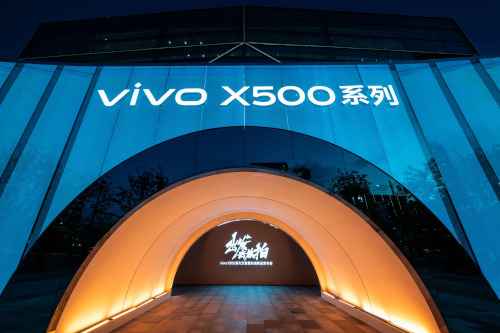
September 23, 2026vivo is pushing its smartphone camera technology further with the launch of the vivo X500 Series in Shanghai, introducing the vivo X500, vivo X500 Pro and vivo X500 Pro Max.
This time, vivo is placing an even stronger focus on dynamic imaging, looking beyond photography to make video, live content and cinematic creation just as important as still images.
The company describes the X500 Series as its next step towards delivering “dual excellence in photo and video”, intending to give users a device that can handle everything from everyday photography to serious video creation without needing to carry a second camera.
From Taking Photos to Capturing the Whole Moment
vivo’s imaging strategy has traditionally focused on areas such as portraits, telephoto photography and concert shooting.
But as video and live content become a bigger part of how people record and share their lives, vivo is shifting its focus towards what it calls dynamic imaging.
The X500 Series builds on vivo’s experience in smartphone photography while combining sensors, imaging chips and algorithms to improve the way the phone captures moving subjects, changing lighting and video content.
Huang Tao, Vice President of vivo, said the goal is to make the professional ceiling high enough for creators while keeping the barrier to cinematic-looking footage low enough for everyday users.
vivo X500 Pro Max: The Imaging Flagship
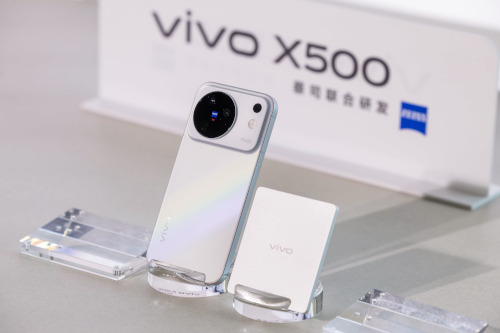
Sitting at the top of the series is the vivo X500 Pro Max, which introduces several of vivo’s latest imaging technologies.
The phone debuts the vivo × Sony LYTIA L910 sensor, delivering a claimed 17 EV ultra-high dynamic range in true output.
In practical terms, this is designed to help the camera retain more detail between very bright and very dark areas, particularly when shooting scenes with challenging lighting.
The Pro Max also features a 200MP ZEISS APO Telephoto Camera, supporting the 400mm Equivalent vivo ZEISS Telephoto Extender Gen 2 Ultra for long-range shooting.
For video creators, one of the headline features is 4K 240fps Cinematic Slow-Mo Video, allowing fast-moving moments such as splashing liquid or bursting bubbles to be captured in slow motion.
It also supports 8K Native Live, bringing higher-resolution live content directly from the phone.
A Phone Built Around Video Creation
The vivo X500 Pro Series takes video more seriously with support for 17 EV TrueDynamic Log Video, alongside 10-bit 4:2:2 encoding and ACES support.
The series has also partnered with DaVinci to support official colour transformation, allowing smartphone Log footage to be colour-graded within the same colour space used for professional cinema camera workflows.
For creators who want more control over their footage, vivo and MediaTek have also worked together on professional Log video hardware, enabling 4K 120fps 10-bit Log burn-in direct output.
The X500 Pro Series further supports 4K 120fps AF Tracking Video, designed to quickly reacquire a subject even when it temporarily moves behind an object in the foreground.
Portrait video gets an upgrade too, with 4K Cinematic Portrait Video, bringing portrait beautification and HDR production together for video.
Cinematic Colours Without Heavy Editing
Not everyone wants to spend hours colour-grading footage, so vivo is also introducing six new cinematic video colour styles.
These include:
- Golden
- Platinum
- Sunny Day
- Paris Afterglow
- Noir
- Amber
The styles are tuned through vivo’s colour processing pipeline, with adjustments designed specifically for people and scenery.
The result is aimed at giving users more creative choices straight from the phone, without requiring extensive post-production.
Making Cinematic Video Easier for Everyone
The X500 Pro Series also includes a Cinema mode with four camera movement options:
- Auto Framing Video
- Vortex Shot
- Super Slow-Mo
- Dual View
These modes are designed to make cinematic-style shooting more accessible, even for users who may not have professional video experience.
So while vivo is clearly targeting professional creators, the company is also trying to make some of these tools easier for everyday users to pick up and use.
Stabilisation for Shooting on the Move
The main camera on the X500 Pro Series uses the ZEISS TrueDynamic Main Camera, featuring a 1/1.28-inch sensor and ZEISS T* Coating.
On the X500 Pro Max, the main camera offers 3° gimbal-grade OIS, while both the main and telephoto cameras achieve CIPA 7.0 Professional Stabilization.
The X500 Pro also features the ZEISS APO Telephoto Camera with CIPA 7.0 Professional Stabilization.
For anyone recording while walking, travelling, attending concerts or following moving subjects, stabilisation can be just as important as resolution because it helps keep footage usable rather than simply making it sharper.
The Standard vivo X500 Still Packs Serious Imaging Hardware
The standard vivo X500 is not being left behind.
Its main camera uses the vivo × Sony LYTIA 828 sensor, featuring a 1/1.28-inch sensor and ZEISS Gimbal-Grade OIS.
For telephoto shooting, it uses the vivo × Sony LYTIA 610 sensor, offering 64MP resolution, 4K 120fps high-spec slow-motion video and CIPA 5.5 Professional Stabilization.
The X500 also supports 4K 120fps slow motion, cinematic colour styles, 4K 60fps Cinematic Portrait Video across all focal lengths, 4K 120fps 10-bit Log and 4K 120fps HLG.
The entire X500 lineup also supports 8K Native Live, making high-resolution live content a feature across the range rather than something reserved only for the top model.
Turn the X500 Into an Ultra-Telephoto Setup
vivo is also offering an imaging accessory ecosystem for the series.
The 200mm Equivalent vivo ZEISS Telephoto Extender Gen 2 weighs 153g and has a 96mm ultra-compact body.
It supports 14 shooting modes covering areas such as portraits, landscapes and stage photography.
For users who want to go even further with their telephoto shooting, the X500 Pro Max can be paired with the more powerful 400mm-equivalent extender.
Performance, Battery and Displays
The X500 Pro and X500 Pro Max are powered by the MediaTek Dimensity 9600 Pro, built on a second-generation 2nm process.
The Pro Max features a 6.85-inch 2K ZEISS Master Color Display and a huge 7,800mAh BlueVolt Battery.
The X500 Pro comes with a 6.36-inch ZEISS Master Color Display and a 6,510mAh BlueVolt Battery.
Meanwhile, the standard X500 uses the MediaTek Dimensity 9600M, paired with a 7,500mAh BlueVolt Battery, 6.59-inch ZEISS Master Color Display, 90W FlashCharge and 40W Wireless FlashCharge.
All three models run OriginOS 7, with features including Origin Workbench. The X500 Pro and Pro Max have also passed vivo Lab’s 72-month anti-ageing model test.
More Than Just a Camera Phone
With the X500 Series, vivo is clearly trying to move the conversation beyond megapixels.
The company is combining large sensors, telephoto cameras, advanced stabilisation, high-frame-rate video, Log recording, cinematic colour and live broadcasting into one mobile imaging system.
For users, that could mean one phone handling the roles traditionally divided between a smartphone, dedicated camera and video device.
The vivo X500 Series has launched in China, with the lineup currently comprising the vivo X500, vivo X500 Pro and vivo X500 Pro Max.
The series is rumoured to arrive in Malaysia in October 2026, although local pricing, configurations and availability have yet to be confirmed.
For Malaysian readers interested in the lineup, the next big question will be whether vivo brings the Pro Max to our market — because if it does, its combination of 17 EV dynamic range, 200MP telephoto, 4K 240fps slow motion and 7,800mAh battery could make this one of the more interesting imaging-focused smartphones to watch.