
Samsung Brings Game Characters Into the Real World with Glasses-Free 3D at Tokyo Game Show 2026
September 23, 2026What if your favourite game character could step out of the screen and appear right in front of you?
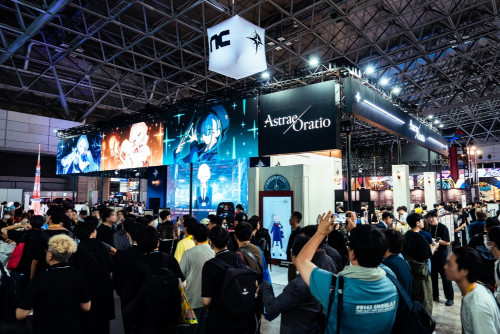
That was the experience Samsung Electronics and NC brought to Tokyo Game Show (TGS) 2026, held from September 17 to 20 at Makuhari Messe in Chiba, Japan. The two companies showcased how glasses-free 3D Spatial Signage can transform game characters and digital worlds into physical experiences.
The technology was used to bring characters from Astrae Oratio, NC’s upcoming urban fantasy RPG, into the real world through large-scale displays designed to create a strong sense of depth without requiring visitors to wear 3D glasses.
Turning a Game Booth Into an Immersive Experience
At NC’s booth, an 85-inch Samsung Spatial Signage display was built into an elevator-themed installation at the entrance.
Using Samsung’s patented 3D Plate technology, the display presented Astrae Oratio characters at almost life-size scale, creating the impression that they were standing within the physical space behind the screen.
The idea was to make the characters part of the visitor’s first impression of the game rather than simply showing them on a conventional promotional screen.
Yongsoo Lee, Head of the Astrae Oratio Business Division at NC, said the team wanted visitors to feel as though they were meeting the characters face-to-face and entering the game’s world from the moment they arrived.
The reaction from visitors highlighted how different the experience could feel compared with a traditional display.
Content creator Kawaii CoCo described the moving character as feeling more interactive and human-like, while also noting its strong visual impact when captured for social media.
One visitor, Daniel Acero, said the display initially appeared to him like a transparent screen with a real space behind it rather than a conventional display, highlighting the depth effect created by the technology.
Despite its slim 52mm profile, Samsung Spatial Signage is designed to create the visual impression of a deeper space behind the screen.
Keeping Visitors Engaged While They Wait
Samsung and NC also used smaller 32-inch Spatial Signage displays around the booth, including waiting areas and along the visitor route.
With a slimmer 49.4mm profile, these displays could be installed in tighter spaces while continuing the character experience throughout the booth.
Rather than leaving visitors looking at static promotional materials while waiting, the displays gave them another opportunity to interact visually with the game’s characters.
Visitor Tomas Portier said the displays helped make the queue feel less tedious while allowing him to become more familiar with the characters.
Making Better Use of Limited Space
Beyond creating a visual attraction, the installation also demonstrated how display technology can be integrated into practical booth design.
According to NC, the slim form factor made it easier to work within the limited space available at the event while leaving room behind the display for merchandise storage.
At the entrance, the large display became the visual focal point while the space behind it served a practical purpose.
This combination of visual impact and space efficiency could be particularly useful for game publishers, retailers, event organisers and other businesses looking to incorporate digital content into physical environments without requiring a large installation footprint.
More Than Just Gaming
The potential applications of Spatial Signage could also extend beyond gaming.
Visitors and industry professionals at TGS 2026 suggested possible uses ranging from retail and commercial branding to theme parks, live events and other public spaces.
Imagine seeing a favourite character moving in three dimensions while walking through Akihabara, discovering animated characters inside a retail store, or encountering digital performers at a theme park.
Miguel Moren, a gaming industry professional and TGS exhibitor, described the concept as a blend between the imaginary world of video games and the real world.
Another potential application could be retail. Nicolas Felix suggested that the technology could be used to showcase clothing on digital characters, while other visitors pointed towards theme parks and events as possible environments for the technology.
Samsung Spatial Signage Beyond Tokyo Game Show
The TGS 2026 installation is not the only example of Samsung exploring how digital content can become part of physical environments.
At Everland Safari World in South Korea, Spatial Signage has been integrated into a waiting queue, turning an area traditionally used for crowd management into part of the attraction.
Meanwhile, at the Governors Ball Music Festival in the United States, an 85-inch display was used to showcase merchandise, combining entertainment and commerce within the live-event environment.
For game publishers and IP owners, this could open up another way to connect audiences with characters beyond smartphones, monitors and traditional advertising screens.
With glasses-free 3D, different display sizes and a slim form factor, Samsung Spatial Signage is positioning the display not simply as a screen, but as another way to bring digital storytelling into the physical world.